



Heat exhaustion and heat stroke are serious heat-related illnesses that can occur when the body is exposed to high temperatures, especially during physical activity or prolonged sun exposure. Recognizing the early signs of these conditions is crucial for prompt treatment and preventing severe complications.
Understanding Heat Exhaustion
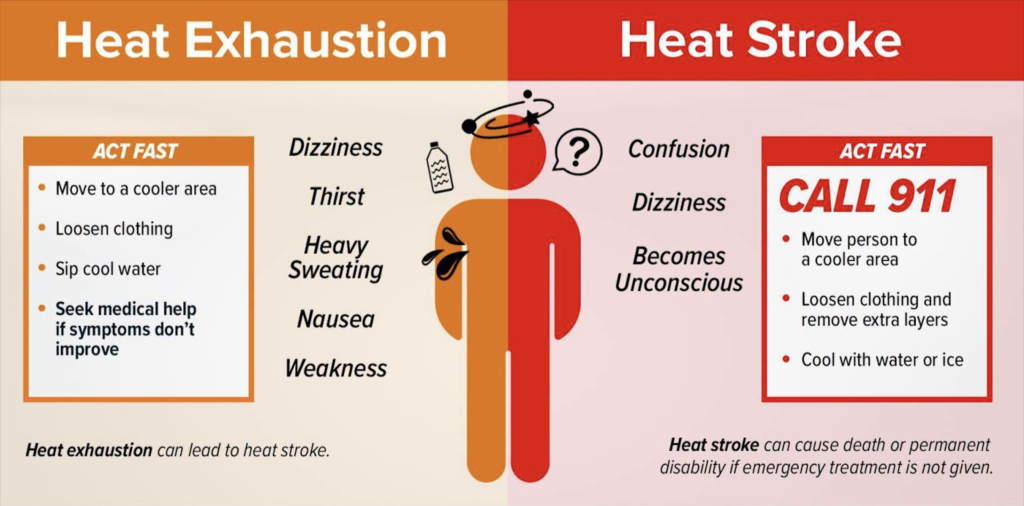
Heat exhaustion is the body’s response to excessive heat and dehydration. It often precedes heat stroke and can develop after prolonged exposure to high temperatures combined with inadequate fluid intake. Common early symptoms include:
- Heavy sweating
- Weakness or fatigue
- Dizziness or lightheadedness
- Nausea or vomiting
- Headache
- Muscle cramps
- Pale, cool, and moist skin
- Fast, weak pulse
If you or someone else experiences these symptoms, it is important to move to a cooler place, rest, and drink plenty of fluids. Avoid strenuous activities until fully recovered.
Recognizing Heat Stroke
Heat stroke is a medical emergency that occurs when the body’s temperature regulation fails, causing body temperature to rise to 104°F (40°C) or higher. It can be life-threatening and requires immediate medical attention. Early signs of heat stroke include:
- High body temperature
- Hot, red, dry, or damp skin
- Rapid, strong pulse
- Confusion, agitation, or irritability
- Headache
- Dizziness or fainting
- Nausea or vomiting
- Seizures
- Loss of consciousness
Unlike heat exhaustion, sweating may stop as the body loses its ability to cool down. If you suspect heat stroke, call emergency services immediately and try to cool the person down by moving them to shade, applying cool cloths, or using a fan.
Prevention Tips
To reduce the risk of heat exhaustion and heat stroke:
- Stay hydrated by drinking plenty of water throughout the day
- Avoid strenuous activities during the hottest parts of the day
- Wear lightweight, loose-fitting, and light-colored clothing
- Take frequent breaks in shaded or air-conditioned areas
- Use sunscreen to prevent sunburn, which can affect the body’s ability to cool itself
By being aware of the early signs and taking preventive measures, you can protect yourself and others from the dangers of heat-related illnesses.